More about Skin Protection Cushions
Skin protection wheelchair cushions are designed for users who need more pressure redistribution than a basic general-use cushion typically provides. The selection on this page includes foam, gel, fluid, air, and alternating-pressure designs with options suited to different positioning needs, mobility routines, and levels of skin risk.
These cushions work by increasing immersion and envelopment. Immersion describes how the body settles into the cushion, while envelopment describes how closely the cushion conforms around the user. Together, these properties can spread pressure across a broader surface instead of concentrating it beneath areas such as the pelvis and thighs. Skin protection cushions are part of our broader selection of standard wheelchair cushions and should be chosen with the user’s complete seating needs in mind.
Benefits of skin protection wheelchair cushions
A skin protection cushion can help redistribute pressure, manage shear, and provide a more supportive sitting surface for users who spend extended periods in a wheelchair. This can be especially important for people who have limited ability to shift their weight independently, reduced sensation, a history of skin concerns, or other factors that increase the risk of tissue damage. Cushion performance depends on correct sizing, setup, and everyday use.
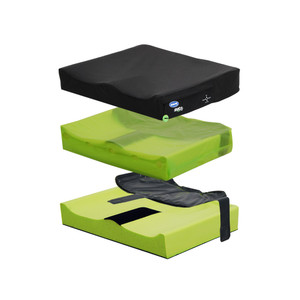
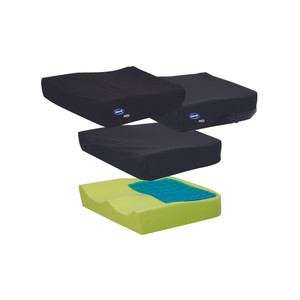
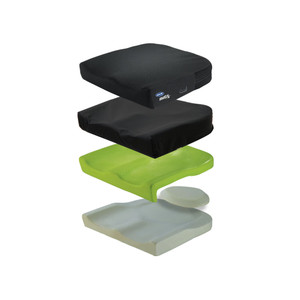
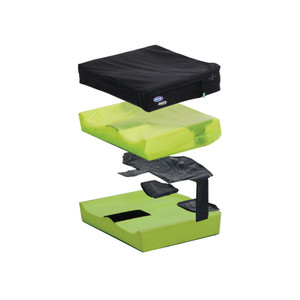
The right design can also support sitting tolerance and daily comfort. Some cushions combine contoured foam with gel, fluid, or air components to balance pressure redistribution with pelvic stability. Others use a more immersive surface or an active alternating-pressure system. These approaches feel and perform differently, so the goal is not simply to select the softest cushion. A useful cushion should match the user’s risk level without making transfers, propulsion, or seated stability unnecessarily difficult.
Choosing between air, gel, fluid, and foam
The central decision is how much immersion and envelopment the user needs compared with how much stability is required for transfers and functional movement. A deeply immersive surface may provide effective pressure redistribution, but it can also feel less stable to someone who relies on the seat for leverage. A firmer contoured base may make transfers and wheelchair propulsion more manageable, while still providing support through carefully placed pressure-relieving materials.
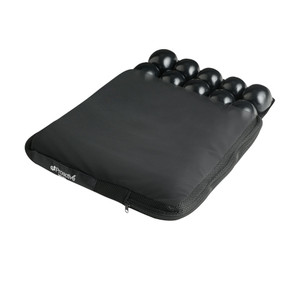
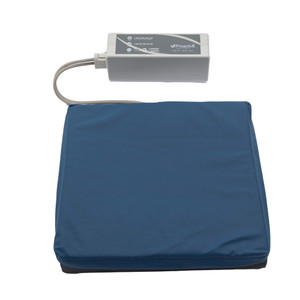
Material also affects maintenance and day-to-day feel. Air cushions can conform closely to the body, but adjustable models may require inflation checks and correct setup. Gel and fluid layers can move with the user and reduce pressure concentration, although they may add weight to the wheelchair. Foam generally provides a stable, predictable base and may be shaped into contours for positioning. Powered alternating-pressure systems cyclically change pressure beneath the user and may be considered for people with more complex needs, but they require a power source and additional equipment management.
No material should be selected by name alone. Two cushions that both contain gel, for example, may differ significantly in contour, layer construction, cover design, height, weight capacity, and intended risk level. Products such as the Matrx Libra Cushion and Protekt gel or air models illustrate the range of constructions available, but the correct choice depends on the individual rather than the material label.
How to choose
Start with the user’s clinical needs and daily routine, not just the dimensions of the wheelchair. A cushion affects seat height, footrest position, access to the wheels, transfers, posture, and the overall fit of the seating system. These details are particularly important when replacing an existing cushion with a model of a different thickness or construction.
Consider the following criteria when comparing skin protection wheelchair cushions:
- Skin risk level: Consider sensation, circulation, moisture exposure, previous skin concerns, sitting duration, and the ability to perform independent weight shifts.
- Immersion and envelopment: Determine how closely the surface should conform around the pelvis and thighs to distribute pressure while maintaining adequate support.
- Transfer method: A stable foam base or defined front edge may be useful for users who perform sliding, stand-pivot, or independent transfers. Highly immersive surfaces may require a transfer technique adjustment.
- Postural support: Look at pelvic alignment, tendency to slide forward, lateral stability, and whether the user needs contouring or an anti-thrust design. A wedge or anti-thrust cushion should only be selected when that geometry matches the positioning goal.
- Material and maintenance: Air may need pressure checks, while gel or fluid cushions should be monitored for material displacement or damage. Foam condition should also be checked regularly for compression and loss of shape.
- Cushion height and wheelchair setup: A thicker cushion raises the user in the chair and can change armrest height, foot support, table access, and wheel reach.
- User and wheelchair weight limits: Confirm that the selected size and model support the user and fit the wheelchair seat without gaps, overhang, or compression against the side guards.
- Cover performance: A stretch cover can allow the cushion to conform as intended. Moisture resistance, breathability, incontinence protection, and ease of cleaning may also influence the choice.
- Portability and equipment needs: Cushion weight matters when the wheelchair is lifted into a vehicle. Alternating-pressure systems may also include pumps, hoses, batteries, or power cords that must be managed.
- Caregiver involvement: Consider who will inspect the skin, adjust the cushion, clean the cover, check inflation, and verify that the cushion is oriented correctly.
A qualified healthcare or seating professional can help evaluate skin risk, posture, transfer technique, and pressure redistribution needs. Once those requirements are clear, Aracent Healthcare can help you compare available sizes, materials, weight capacities, and product features so you can make a more informed purchase.
Frequently asked questions
Skin protection cushions vary widely in construction and intended use. The answers below address the practical questions that often arise when comparing pressure-redistributing wheelchair cushions online.
Always follow the cushion manufacturer’s instructions and any guidance provided by the user’s medical or seating team. Changes in skin condition, posture, comfort, or function may indicate that the cushion setup should be reviewed.
Who should consider a skin protection wheelchair cushion?
These cushions may be appropriate for wheelchair users who sit for long periods, have difficulty repositioning themselves, have reduced sensation, or have other factors associated with increased skin risk. They may also be considered for users with a history of pressure-related skin concerns or those whose current cushion does not provide enough immersion and envelopment.
Risk cannot be determined from sitting time alone. Mobility, nutrition, circulation, moisture, continence, posture, body shape, and the ability to complete pressure-relief movements all matter. A clinician can evaluate these factors and recommend the appropriate cushion category and level of protection.
Is an air cushion more protective than a gel or foam cushion?
Not in every situation. Air, gel, fluid, and foam each interact with the body differently, and cushion construction matters as much as the material. An air design may offer substantial immersion, while a contoured foam cushion with gel or fluid components may combine pressure redistribution with a more stable base.
The appropriate choice depends on skin risk, seated balance, transfer method, maintenance ability, and wheelchair setup. A cushion that requires frequent adjustment may not perform as intended if those checks cannot be completed consistently. Likewise, a very stable surface may not provide enough immersion for a user with more complex pressure-management needs.
What is the difference between a gel cushion and a fluid cushion?
The terms are sometimes used broadly, but gel and fluid inserts can have different consistencies and movement characteristics. Both are commonly paired with foam to help the cushion conform beneath the pelvis and reduce concentrated loading. The amount and placement of the material vary by product.
When comparing these cushions, look beyond the label. Consider whether the insert is concentrated under the pelvic area, how much contour the foam base provides, whether the material can shift, and how heavy the complete cushion is. Product instructions may also specify inspection or kneading procedures to keep the insert properly distributed.
Will a skin protection cushion make transfers harder?
It can change the transfer surface. A thick or highly immersive cushion may position the user higher in the wheelchair or allow the pelvis to settle more deeply. This can affect lateral transfers, standing transfers, foot placement, and the amount of force needed to move across the seat.
Users who transfer independently may prefer a stable front edge, firmer base, or moderate contour that provides pressure redistribution without interfering with their technique. The cushion’s height should also be considered in relation to the bed, toilet, vehicle seat, and other surfaces used throughout the day.
How do I know if a wheelchair cushion fits correctly?
The cushion should match the wheelchair’s seat width and depth according to the manufacturer’s sizing instructions. It should sit flat, face the correct direction, and remain secure without curling, bunching, or extending beyond the seat frame. The user should be positioned on the intended support areas rather than sitting on the front edge or against the back of the cushion.
Fit also includes what happens after the user settles into the cushion. Check that there is adequate support beneath the pelvis, that the cushion is not bottoming out, and that the user’s legs and feet remain properly supported. Any change in cushion height may require adjustment of footrests, arm supports, or other wheelchair components.
How often should a skin protection cushion be checked or replaced?
Inspect the cushion and cover regularly according to the manufacturer’s instructions. Look for compressed foam, leaks, punctures, displaced gel or fluid, damaged seams, worn cover material, and changes in how the user sits. Air cushions should be checked for proper inflation, while powered systems should be reviewed for pump, hose, and power function.
There is no single replacement schedule that applies to every product. Frequency of use, body weight, transfers, cleaning practices, environmental conditions, and cushion construction all influence service life. If the cushion no longer returns to shape, supports the user as intended, or maintains its required settings, contact the manufacturer or a seating professional for guidance.
Choosing among skin protection wheelchair cushions comes down to balancing pressure redistribution with stability, transfer access, and practical maintenance. Review the available options, or contact Aracent Healthcare for personalized help comparing cushion materials, sizes, and features for your seating needs.