Wheelchair Backrests for Positioning and Trunk Support
A wheelchair backrest does more than provide a surface to lean against. It is part of the overall seating system and can influence how consistently the pelvis and trunk are supported throughout the day.
Some users simply need more structure than flexible sling upholstery provides. Others may benefit from greater lateral trunk contact, adjustable contouring, accommodation of asymmetry, or compatibility with additional positioning supports.
The appropriate backrest should provide the support the user needs without unnecessarily limiting movement or function.
Flexible and Tension-Adjustable Back Support
Not every positioning need requires a rigid backrest.
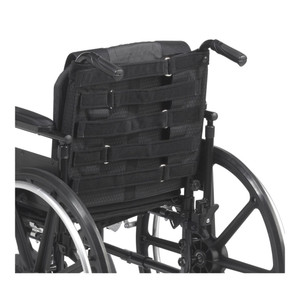
Tension-adjustable backrests use individually adjustable straps to shape the support surface behind the trunk. By changing strap tension, the back can be configured to provide additional lumbar support or accommodate variations in spinal shape.
This type of support can be useful for users who want more adjustability than standard sling upholstery while retaining a flexible seating surface. Tension adjustment may also allow the back to accommodate postures such as kyphosis more readily than a fixed, flat support surface.
The amount of support available depends on the design of the backrest and the user's individual positioning needs.
Rigid Contoured Backrests
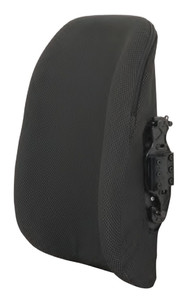
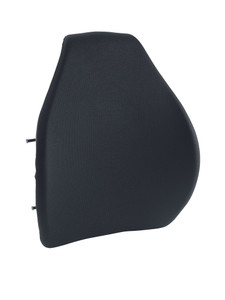
Rigid wheelchair backrests use a formed shell to provide a consistent support surface behind the pelvis and trunk.
Unlike flexible upholstery, the shape of a rigid back remains relatively consistent as the user moves or changes position. This can provide a more repeatable seating setup and allow greater control over backrest height, angle, contour, and lateral trunk contact.
Rigid backs are available in a range of contour depths and configurations, from relatively shallow designs that preserve upper-body freedom to deeper and more adjustable systems intended for greater positioning support.
Contour Depth and Lateral Trunk Support
Contour depth describes how far the sides of a backrest extend around the user's trunk.
A shallower contour generally provides moderate lateral contact while preserving more space for shoulder, arm, and upper-body movement. Increasing contour depth brings more of the backrest around the sides of the trunk and can provide additional stability and lateral support.
Deeper is not automatically better. The appropriate contour should provide enough support for the user's trunk without unnecessarily restricting reaching, transfers, wheelchair propulsion, or other functional movement.
Users who require substantially greater lateral support may also benefit from a deep-contour backrest or separate lateral trunk supports rather than relying on contour depth alone.
Adjustable and Asymmetric Positioning
Not every user requires the same amount of support on both sides of the trunk.
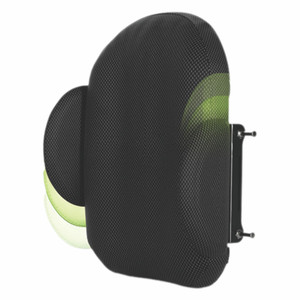
Some positioning backrests provide independently adjustable components that allow the amount or location of lateral support to be modified. This can be useful when a symmetrical backrest shape does not match the user's body position or support requirements.
Adjustability may also allow a seating system to accommodate changes in posture, body shape, or positioning needs without replacing the complete backrest.
When a backrest is being configured to accommodate significant asymmetry or a complex postural presentation, professional wheelchair seating assessment is particularly important.
Optional Lateral Trunk Supports
Lateral trunk supports provide targeted contact along one or both sides of the torso and can be added to compatible wheelchair backrests when the backrest contour alone does not provide the desired level or location of support.
Depending on the system, laterals may be fixed or swing away and may offer adjustment in height, depth, angle, or position.
Because lateral supports provide more localized contact than simply increasing the contour of the entire backrest, they can provide another way to customize trunk support while preserving space where additional containment is not required.
For compatible pads, brackets, and hardware, browse our lateral supports.
How to Choose a Positioning & Support Backrest
Start With the Amount of Trunk Support Needed
Consider how much structure the user requires from the backrest.
A user who primarily needs improved lumbar contour or an alternative to sagging sling upholstery may be well served by a tension-adjustable support. Someone who needs a more consistent pelvic and trunk position may benefit from a rigid contoured back.
More involved positioning requirements may call for deeper contour, independently adjustable support surfaces, or additional lateral components.
The goal is not to maximize support. It is to provide the appropriate amount of support for the individual while maintaining as much useful movement as possible.
Consider Posture and Flexibility
Postural differences can be either flexible or relatively fixed, and that distinction matters when selecting seating equipment.
A backrest may be used to support a more neutral position when the user's posture can comfortably move toward it, or it may need to accommodate an existing spinal or trunk shape rather than attempting to force a different position.
This is especially important for users with significant kyphosis, asymmetry, trunk rotation, or other involved positioning needs.
Balance Support With Functional Movement
Additional contour and positioning support can improve stability, but the backrest must also allow the user to perform necessary activities.
Active manual wheelchair users may need substantial shoulder and scapular freedom for propulsion. Others may need space for reaching, transfers, repositioning, or upper-extremity function.
Backrest height, width, contour depth, and the placement of lateral supports should therefore be considered together rather than selecting one specification in isolation.
Select the Appropriate Width and Height
Backrest width should provide appropriate contact and support without creating unnecessary restriction around the trunk.
Backrest height determines how much of the trunk is supported. Lower backs generally preserve more upper-body movement, while taller backs provide support over a greater portion of the trunk.
The correct dimensions depend on the user's body size, trunk control, posture, wheelchair configuration, and functional needs rather than simply matching the dimensions of the wheelchair's original upholstery.
Check Wheelchair and Mounting Compatibility
Rigid backrests typically attach to the wheelchair's back canes using mounting hardware designed for a particular range of cane diameters and chair widths.
Before ordering, confirm the backrest size, wheelchair back-cane spacing, cane diameter, and required hardware. Some mounting systems also allow adjustment of backrest angle, depth, or position after installation.
Compatibility should be verified for the specific backrest and wheelchair rather than assumed based on wheelchair seat width alone.
Consider the Entire Seating System
The backrest is only one part of wheelchair positioning.
Cushion selection, pelvic position, foot support, wheelchair dimensions, seat angle, head support, and other seating components can all affect how the user sits. A change to the backrest may therefore influence—or be influenced by—other parts of the seating system.
For users with significant postural asymmetry, pressure-management concerns, limited trunk control, or complex seating requirements, evaluation by a qualified wheelchair seating professional may be appropriate.
Frequently Asked Questions
What is a positioning wheelchair backrest?
A positioning wheelchair backrest is designed to provide more structured trunk and pelvic support than basic wheelchair sling upholstery.
Depending on the design, it may offer adjustable tension, rigid contouring, increased lateral trunk contact, asymmetric adjustment, or compatibility with additional positioning supports.
How is a positioning backrest different from standard sling upholstery?
Standard sling upholstery provides a flexible support surface between the wheelchair's back canes. Over time, flexible upholstery can stretch or sag and may provide less consistent support.
A positioning backrest provides greater control over the shape and location of the support behind the user. Depending on the design, it may provide adjustable contour, a rigid support surface, lateral trunk contact, or other positioning features.
What does backrest contour depth mean?
Contour depth describes how far the sides of a rigid wheelchair backrest extend around the user's trunk.
Shallower contours generally preserve greater freedom of upper-body movement. Deeper contours create more lateral trunk contact and can provide additional stability and positioning support.
The appropriate depth depends on the user's trunk control, body dimensions, functional movement, and seating needs.
When are lateral trunk supports used?
Lateral supports may be used when additional or more targeted trunk contact is needed beyond what the backrest contour itself provides.
They can provide support along one or both sides of the torso and, depending on the system, may be adjustable in position, depth, angle, or height.
Whether lateral supports, greater backrest contour, or another seating adjustment is appropriate depends on the individual's overall positioning needs.
Can a positioning backrest accommodate kyphosis?
Some wheelchair backrests can accommodate a rounded spinal posture more readily than others.
Tension-adjustable backs can often be shaped by changing individual strap tension, while certain rigid positioning systems provide adjustable components or contours that can be configured around the user's posture.
For significant or relatively fixed kyphosis, the seating system should generally be configured around the individual's actual posture rather than attempting to force the trunk against an unsuitable back surface.
Can positioning backrests accommodate asymmetry?
Some can. Certain positioning backrests allow different amounts of support or contour to be configured on the left and right sides, while others accept separate lateral supports that can be positioned independently.
These features can help accommodate users whose trunk position or support requirements are not symmetrical.
Will a positioning backrest fit any wheelchair?
No. Compatibility depends on the backrest dimensions, wheelchair back-cane spacing, cane diameter, mounting hardware, and overall seating configuration.
Review the mounting specifications for the exact backrest before ordering.
Can I install a positioning backrest myself?
Installation requirements vary by model. Mounting a compatible backrest to the wheelchair may be relatively straightforward, but selecting its height, angle, depth, contour, and positioning components can have a significant effect on the user's seating position.
Always follow the manufacturer's installation instructions. When the backrest is being used to address a postural or positioning concern, having the final setup evaluated by a qualified seating professional may be appropriate.
Find the Right Level of Back Support
The right positioning backrest should provide enough support to improve stability and maintain a consistent seating position while preserving the movement the user needs for everyday activities.
Consider the type of support required, rigid versus flexible construction, contour depth, backrest dimensions, wheelchair compatibility, and whether additional lateral support is needed. For users who primarily need greater lateral trunk contact, you can also browse our deep contour backrests.
If you are unsure which backrest is compatible with a wheelchair, contact Aracent Healthcare with the wheelchair model, back-cane measurements, desired backrest dimensions, and general support requirements, and we can help narrow the available options.