More about Bariatric Cushions
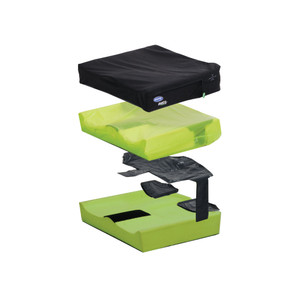
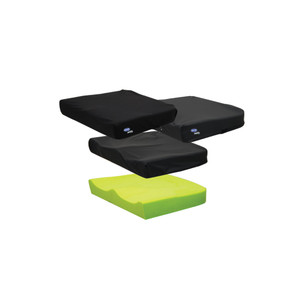
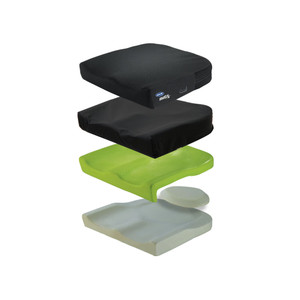
Our bariatric wheelchair cushions include heavy-duty foam, gel, positioning, and skin-protection options for users who need wider dimensions or higher weight capacities. The current selection ranges from straightforward wedge and coccyx cushions to contoured Matrx models designed for more involved seating needs. Some configurations also include anti-thrust contours or pommels for targeted positioning support.
Compared with standard wheelchair cushions, heavy-duty models may use higher-density materials, larger widths, reinforced construction, or weight ratings suited to bariatric seating. These differences can help the cushion retain its intended shape and provide stable support under greater loads. Because dimensions, materials, and performance features vary, the right choice depends on more than finding a cushion labeled “heavy-duty.”
Bariatric cushions are one part of our broader selection of cushions and backrests. Review the cushion’s specifications alongside the wheelchair seat width, seat depth, user weight, positioning goals, and recommendations from a qualified healthcare or seating professional.
Benefits of heavy-duty wheelchair cushion construction
A wheelchair cushion should create a dependable surface between the user and the chair. For bariatric users, appropriate density and load capacity matter because a cushion that compresses too far may not provide the intended support. Heavy-duty wheelchair cushions are designed to manage higher loads while offering the width and depth options needed for compatible bariatric wheelchairs.
The added space of a wider cushion can support the thighs without forcing the user against the side guards or armrests. Correct sizing can also make transfers, wheel access, and lower-extremity positioning more manageable. The goal is a cushion that fits the chair and supports the user, rather than one that overhangs the seat or leaves large unsupported areas.
Material and shape determine how that support feels. High-density foam can provide a stable base and may be shaped to influence pelvic and leg position. Gel layers or inserts can add immersion and pressure-redistribution properties, although their construction and maintenance requirements differ by model. Contoured designs may support the pelvis and thighs more closely than a flat surface, while coccyx cutouts, wedges, pommels, and anti-thrust contours address more specific seating objectives.
Choosing the cushion type that matches the primary need
The central decision is what the cushion needs to accomplish during everyday use. A user seeking a stable, straightforward seating surface may prioritize foam construction, while someone who values added immersion may consider a gel model. If sliding, leg alignment, pelvic stability, or skin-integrity concerns are central to the decision, shape and pressure-management features become more important than material alone.
Our heavy-duty foam cushions use foam as the primary support material. Foam options can be practical for users who want stable support without a gel insert, but density, contour, firmness, and cover design still vary. A wedge shape may influence seat angle, while a coccyx relief area is intended to reduce direct loading around the tailbone region.
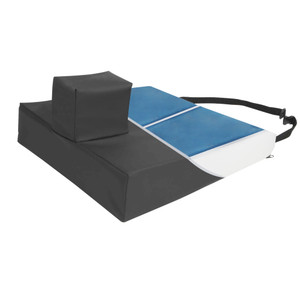
Heavy-duty gel cushions combine a supportive base with gel components in selected areas. Gel can help distribute load and provide additional immersion, but buyers should consider the cushion’s overall weight, care instructions, and the location of the gel rather than assuming all gel cushions perform in the same way.
For users with defined postural goals, heavy-duty positioning cushions include shapes designed to guide or support the pelvis and lower extremities. Wedges, anti-thrust contours, pommels, and anatomical contours serve different purposes. A pommel, for example, provides medial thigh support, while an anti-thrust design is intended to help manage forward movement. Neither feature should be selected solely from a product image.
Users who spend extended periods seated or have elevated skin-integrity concerns can explore heavy-duty skin-protection cushions. These models are designed to support pressure redistribution through combinations of contouring, immersion, envelopment, and specialized materials. Cushion selection should be coordinated with an appropriate clinician when there is an existing wound, reduced sensation, a history of skin breakdown, or limited ability to reposition independently.
How to choose
Begin with measurements and weight capacity, then narrow the selection according to the user’s clinical and functional priorities. A feature-rich cushion is not automatically the right match if its dimensions do not fit the wheelchair or its contours conflict with the user’s posture.
Think about a cushion as part of a seating system rather than a loose accessory placed on top of the chair. Its thickness changes seat-to-floor height, armrest relationship, footrest position, and access to the push rims. Even a one-inch change can affect how a user transfers, propels the wheelchair, or positions their feet.
- Confirm the required weight capacity. Choose a cushion with a published capacity appropriate for the user. Do not assume every wide cushion has a bariatric rating.
- Measure wheelchair seat width and depth. The cushion should correspond closely to the usable seat dimensions without obstructing folding mechanisms, wheels, side guards, or other components.
- Identify the main seating goal. Decide whether the priority is general support, pressure redistribution, pelvic stability, leg alignment, coccyx relief, or help managing forward sliding.
- Compare foam and gel construction. Foam can offer a stable and comparatively simple support surface. Gel components can add immersion and redistribution characteristics, but may increase cushion weight and have different inspection requirements.
- Evaluate the contour. Flat, wedge, coccyx, anti-thrust, pommel, and anatomical designs interact differently with the pelvis and thighs. Select a contour based on the user’s body and positioning needs.
- Check cushion thickness. A thicker cushion raises the user in the wheelchair and may require adjustments to footrests, armrests, wheel access, or back support.
- Review the cover. Look at breathability, fluid resistance, stretch, cleaning instructions, zipper placement, and whether replacement covers are available. Cover properties vary by product.
- Consider transfers and transport. A cushion may need to be removed frequently for vehicle loading, folding, or transfers. Product weight and handles can matter in these situations.
- Follow professional recommendations when appropriate. A physical therapist, occupational therapist, assistive technology professional, or other qualified clinician can evaluate posture, skin risk, sensation, and functional use.
Once you have established the required size, capacity, and seating objective, compare only the models that meet all three. This keeps an attractive secondary feature from overshadowing the basics that determine whether a bariatric wheelchair cushion will work with the user and chair.
Frequently asked questions
Bariatric cushion specifications can look similar at first glance, yet differences in width, density, contour, and material can substantially change how a product feels and functions. The following answers address the practical questions that often arise when comparing heavy-duty wheelchair cushions.
Product details should always take priority over general category descriptions. Review the listed dimensions, weight capacity, construction, care instructions, and compatibility information for the individual cushion before ordering.
What makes a wheelchair cushion bariatric or heavy-duty?
A bariatric wheelchair cushion is designed to accommodate higher user weights, wider seating dimensions, or both. Depending on the model, it may use higher-density foam, reinforced materials, specialized contouring, or construction intended to maintain support under heavier loading.
There is no single universal width or weight capacity that defines every bariatric cushion. Always verify the manufacturer’s published specifications. A large-looking cushion is not necessarily rated for heavy-duty use, and a high-capacity cushion may be available in several widths.
Should I choose a foam or gel bariatric cushion?
Foam cushions can provide stable support and may be lighter or simpler to handle, depending on the design. Different foam densities and layered constructions produce different levels of firmness, contouring, and immersion, so “foam” describes a broad group rather than one seating experience.
Gel cushions typically pair gel components with a foam or molded base. They can help with immersion and pressure redistribution, but placement and quantity of gel vary. Consider overall weight, maintenance, temperature sensitivity, transfer routine, and clinical recommendations when comparing the two types.
How do I measure for a bariatric wheelchair cushion?
Measure the usable width and depth of the wheelchair seat, not the overall width of the chair. Width is generally measured between the inside surfaces of the side supports or armrest structures. Depth is measured from the back support area to the front edge of the seat, allowing suitable clearance behind the knees.
Also check the cushion’s finished dimensions rather than relying only on the wheelchair’s labeled seat size. If the chair has a sling seat, rigid seat insert, lateral supports, or unusual frame hardware, confirm how those components affect the available space.
What is the difference between a wedge, pommel, anti-thrust, and coccyx cushion?
A wedge cushion changes the seating angle through a sloped profile. A pommel provides support between the thighs and may help maintain lower-extremity alignment. An anti-thrust contour is shaped to help manage forward pelvic movement, while a coccyx cushion includes a relieved area intended to reduce direct loading near the tailbone.
These features are not interchangeable, even when two cushions look similar in photographs. The user’s pelvic position, range of motion, leg alignment, transfer method, and tendency to slide should guide the choice. More involved positioning concerns are best evaluated by a qualified seating professional.
Can a heavy-duty cushion help with pressure redistribution?
Many bariatric wheelchair cushions are designed to help distribute pressure across a broader contact area. Contoured foam, gel inserts, immersion, and envelopment can contribute to pressure management, but the degree and method differ among products.
No cushion removes the need for regular skin checks, appropriate repositioning, good posture, and an individualized care plan. Users with reduced sensation, current skin concerns, or a history of pressure injuries should seek professional guidance before changing their seating system.
Will a thicker bariatric cushion change how the wheelchair fits?
Yes. Cushion thickness raises the user relative to the floor, wheels, armrests, backrest, and foot supports. This may affect push-rim access, table clearance, transfer height, trunk support, and whether the feet remain properly supported.
Check these relationships whenever replacing a cushion with a model of a different thickness or contour. If you are uncertain which size, material, or child category fits your needs, contact Aracent Healthcare for personalized product assistance. Our team can help you compare published specifications and narrow the available bariatric cushions to options that match your wheelchair and seating priorities.