More about Headrests
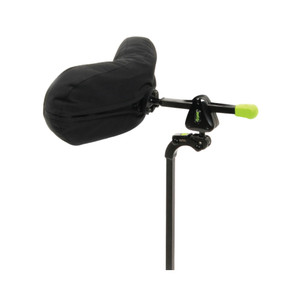
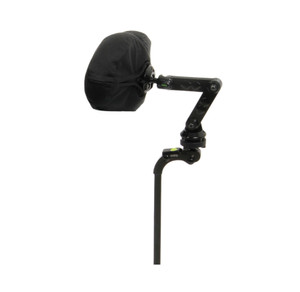
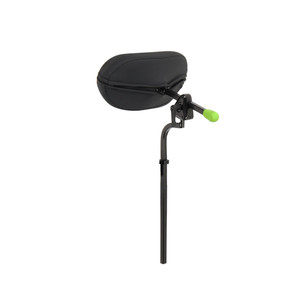
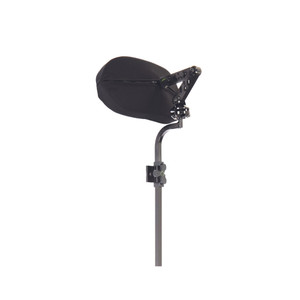
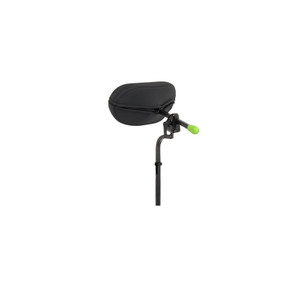
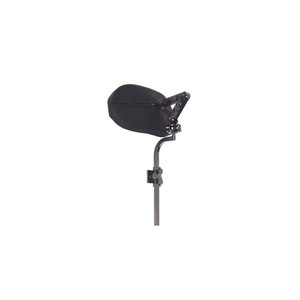
Wheelchair headrests are built from two coordinated components: a headrest pad and the mounting hardware that connects it to the wheelchair back. This category brings both pieces together, including standard, occipital, adjustable, and multi-point pads as well as standard, mini, and flip-style hardware options.
The correct combination can provide support for the head and neck while helping the user maintain a more stable seated position. Because pads and hardware perform different jobs, they should be selected as a system rather than treated as interchangeable accessories. Explore our dedicated headrest pads and headrest hardware categories to compare each part of the setup, or return to Cushions & Backrests for additional wheelchair seating and positioning products.
Benefits of a properly selected wheelchair headrest
A wheelchair headrest provides a contact point behind and, in some designs, around the head. It can help support a neutral position, reduce the effort required to hold the head upright, and provide added stability during tilt or recline. This support may be useful for people with reduced head control, muscle weakness, fatigue, asymmetrical posture, or positioning needs that change throughout the day.
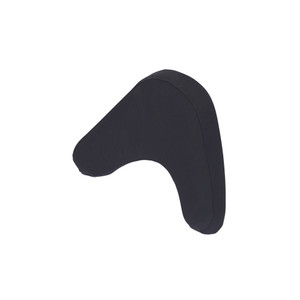
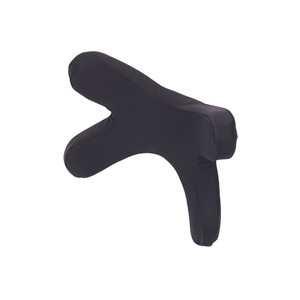
Pad shape makes a meaningful difference. A standard pad offers a straightforward posterior support surface, while an occipital pad is shaped to contact the back of the head more closely. Adjustable or multi-point designs can provide additional contact around the sides of the head when that positioning is appropriate. These designs are not substitutes for one another. The useful choice depends on where support is needed and how much freedom of movement the user should retain.
Mounting hardware is just as important as the pad. It determines where the pad sits, how securely it maintains that position, and how easily a caregiver can adjust or move it. Some hardware offers multiple adjustment points for fine-tuning pad height, depth, and angle. Certain FLIPP configurations are designed to move the pad out of the way when needed, while mini hardware may suit installations where a more compact assembly is appropriate.
A correctly configured headrest should support the user without forcing the head forward or limiting necessary movement. It may also make tilt, recline, transportation, and caregiver-assisted repositioning more comfortable, depending on the wheelchair and seating system. The goal is not simply to place a cushion behind the head. It is to create a stable point of support that works with the user’s posture and the rest of the wheelchair seating system.
Choosing the pad and hardware as a matched system
The main decision on this page is not whether to buy a pad or hardware. In most installations, both are required. The headrest pad is the part that contacts the user, while the hardware positions that pad and attaches it to the wheelchair back. A pad without compatible hardware cannot be positioned correctly, and hardware without a suitable pad does not provide user support.
Start with the support objective. Someone who needs simple posterior contact may require a different pad shape than a person who needs lateral guidance or more contour around the occipital area. Products such as the Matrx Elan Standard, Occipital, and 4-Point headrest pads illustrate these distinct support approaches. The amount and location of contact should reflect the user’s posture, range of motion, and tolerance for pressure.
Next, determine how the pad needs to reach the user from the wheelchair back. Hardware selection depends on the backrest, mounting location, required adjustment range, and whether the headrest needs to swing or flip away. Standard and mini hardware may differ in scale and adjustment range, while certain flip-style assemblies are designed to improve access during transfers or other care routines. Always review the specifications for the individual hardware rather than assuming that every option offers the same movement or adjustment.
Compatibility should be confirmed before ordering either component. Check the pad’s mounting interface, the hardware connection, and the wheelchair back or mounting plate. A mounting plate kit may be needed for some Invacare Matrx back systems, but that does not make it universal. If you already own one part of the assembly, identify its model and connection details before choosing the second part.
How to choose
Begin by looking at the user, the wheelchair, and the existing back support as one seating system. A headrest that appears appropriately sized on its own may sit too far forward, too high, or outside the hardware’s usable adjustment range once installed. Measurements and compatibility details matter more than the product’s appearance.
Also consider how the wheelchair is used during an ordinary day. A person who uses tilt or recline may have different support requirements than someone seated upright for shorter periods. Transfers, vehicle transportation, caregiver access, and frequent position changes can also influence the pad and hardware configuration.
- Support location: Decide whether support is primarily needed behind the head, around the occipital area, or at several contact points.
- Pad size and contour: Compare pad width, height, shape, and depth with the user’s head size and desired freedom of movement.
- Hardware compatibility: Confirm that the pad, mounting hardware, wheelchair back, and any required mounting plate use compatible connections.
- Adjustment range: Review available height, depth, and angle adjustments to make sure the pad can reach the required position.
- Standard or mini hardware: Consider the available space, mounting arrangement, pad size, and adjustment needs rather than choosing by profile alone.
- Swing-away or flip function: If the pad needs to move aside for transfers or care, look for hardware specifically designed to provide that function.
- Tilt and recline use: Account for how the user’s head position changes when the seating system moves through its operating range.
- Caregiver access: Consider how often the headrest will be adjusted, removed, or moved out of the way during daily routines.
- Existing components: Record model names, part numbers, measurements, and photographs of the current back and mounting points before ordering.
- Professional guidance: For complex postural needs, work with a qualified seating professional or clinician who can assess the user in the wheelchair.
Once these details are clear, compare pads and hardware separately, then verify them together as a complete assembly. Aracent Healthcare offers product information and personalized assistance to help customers identify suitable options without treating every wheelchair or positioning need as the same.
Frequently asked questions
Wheelchair headrests often raise compatibility questions because the visible pad is only one part of the installation. The connection behind the pad, the adjustment hardware, and the wheelchair back all affect whether the final setup will work as intended.
The answers below address the most common buying decisions for this category. Product specifications vary, so the details listed for a particular pad, bracket, or mounting kit should always guide the final selection.
Do wheelchair headrests include mounting hardware?
Not necessarily. Many wheelchair headrest pads and hardware assemblies are sold as separate products because users may need different combinations of pad shape, hardware size, and mounting style. Read the product listing carefully to see exactly what is included.
Plan for two purchases unless the selected product specifically states that both the pad and mounting hardware are supplied. You may also need a mounting plate or adapter, depending on the wheelchair back. Separating these components allows the support surface and positioning mechanism to be chosen for the individual setup.
What is the difference between a standard, occipital, and multi-point headrest pad?
A standard pad generally provides a broad contact surface behind the head. An occipital pad is contoured to support the lower rear portion of the head more closely. A multi-point or 4-point design provides several contact areas and may offer added lateral guidance when the user requires support from more than one direction.
More contact is not automatically the right choice. The pad should provide useful support without unnecessarily limiting vision, communication, voluntary head movement, or caregiver access. The user’s posture and functional goals should determine which contour is appropriate.
How do I know whether I need standard or mini headrest hardware?
Standard and mini hardware differ in their dimensions, adjustment capacity, and intended configurations. Mini hardware can provide a compact mounting arrangement for certain pads and back systems, while standard hardware may offer a different reach or range of positioning. Exact capabilities depend on the specific model.
Check the selected pad, mounting interface, available space behind the wheelchair, and required adjustment range. Do not choose mini hardware solely because it looks less prominent. It still needs to place the pad at the correct height, depth, and angle for the user.
Can I add a headrest to my current wheelchair back?
Many wheelchair backs can accept headrest hardware, but the installation method varies. Some backs include compatible mounting points, while others require a separate mounting plate or adapter. Upholstery backs, rigid backs, and aftermarket back supports may each use different hardware arrangements.
Identify the wheelchair back’s manufacturer and model before purchasing. If possible, locate its serial number or part label and inspect the rear surface for existing mounting holes or brackets. A mounting plate kit for an Invacare Matrx back, for example, should only be used with the back systems and hardware identified in its product specifications.
When is flip or swing-away headrest hardware useful?
Flip or swing-away hardware is designed to move the pad away from its support position without requiring the entire assembly to be removed. This function can improve access during certain transfers, personal care routines, seating adjustments, or equipment setup. The direction and range of movement vary by model.
This hardware still needs to return the pad to a consistent, secure position. Consider who will operate the mechanism, how often it will be moved, and whether there is enough clearance around the wheelchair. Review the individual product’s operation and locking method before deciding whether this feature fits the user’s routine.
How should a wheelchair headrest be positioned?
Position depends on the pad style and the support objective, but the headrest should generally contact the intended area without pushing the user’s head forward. The pad should remain appropriately placed as the wheelchair tilts or reclines, if those functions are used. Height, depth, and angle may need to be adjusted together rather than one at a time.
Complex positioning should be assessed while the user is seated in the wheelchair. A qualified seating professional can evaluate posture, skin tolerance, range of motion, and interaction with the backrest. After installation, recheck the setup during real activities, since a position that appears correct while stationary may feel different during movement or extended use.
Can one headrest setup fit every wheelchair user?
No. Users differ in head control, posture, body dimensions, movement, sensory tolerance, and daily activities. Wheelchair backs also differ in shape, height, mounting points, and available space. These variables are why headrest pads and hardware are offered in several configurations.
A successful selection begins with the support needed, then matches the pad, hardware, and wheelchair back. If you are uncertain about compatibility, contact Aracent Healthcare with the wheelchair back model, existing component information, and desired support position. Our experienced team can help you compare the available wheelchair headrests and identify the next details to verify before ordering.