More about Heavy-Duty Wheelchairs
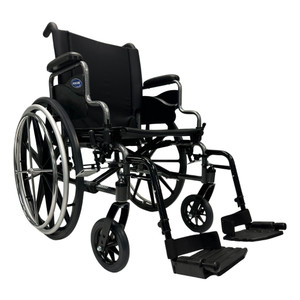
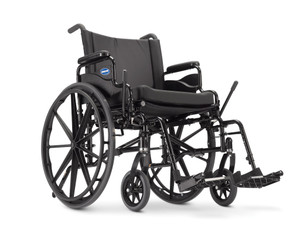
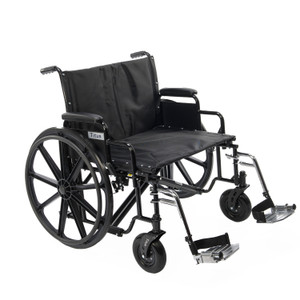
A heavy-duty manual wheelchair is a manual chair built around a higher weight rating. The frame is reinforced at the points that carry the load, and the seat comes in wider sizes, so a larger user has room to sit comfortably and get through the day with support they can count on.
Heavy-duty chairs are one of the frame types you'll find within our manual wheelchairs, and they work the way any manual chair does, pushed by the user on the hand rims or by a caregiver from behind.
Three things set one heavy-duty chair apart from the next. The first is the weight rating, the most the chair is designed to carry. The second is the seat width, which decides how the user fits between the armrests. The third is the overall width that comes along with that seat, and that is the number that tells you whether the chair will make it through the doors at home.
Benefits of a heavy-duty manual wheelchair
The strength tests in the American standard for wheelchairs are written for users who weigh up to 100 kilograms, about 220 pounds. A user above that weight needs a chair with a published capacity to match, and a bariatric manual wheelchair carries a higher rating than a standard chair. Its frame is reinforced where the weight sits, such as the side frames, the cross braces, the axle mounts and the housings that hold the front casters, so it's designed for steady, everyday use at home or in a care facility.
More room across the seat and between the armrests makes a real difference during transfers. A user with space to shift and turn can slide on and off the seat without squeezing past the armrest, and the hips and thighs can rest flat on the seat through a long day in the chair.
A wider seat also needs a cushion and a back sized and rated for the same user. A cushion that fits the seat and carries the right rating can help it hold its shape under the load, and our bariatric wheelchair cushions come in the wider sizes these chairs use. The back works the same way, and our heavy-duty backrests for bariatric users are designed to match.
The key decision: weight rating, seat width and the doorways it has to fit
A higher rating can bring a wider frame and a heavier chair to push and lift, so the place to start is a capacity that suits the user. The highest number on the page adds bulk the user may never need.
Seat width comes next, and it's sized to the user's own body. Our guide to measuring for the right wheelchair size walks through it: measure the widest point of the hips or thighs while seated, then add an inch or two for comfort and movement. The wheels and hand rims sit outside the frame, so the chair's overall width always runs wider than the seat itself.
That overall width has to fit every doorway on the chair's route. A doorway's usable opening is measured with the door open all the way to 90 degrees, from the face of the door to the stop on the other side, and an accessible route calls for at least 32 inches of clear opening. Many homes have less than that. A standard 32-inch door, hung the usual way, leaves only about 30 to 30 and a half inches, and many 6-foot sliding patio doors open no wider than 28 and a half inches. Measure the front door, the bathroom and the bedroom, take your time with each one, and compare the narrowest with the overall width listed on the product page. Swing-clear hinges can open a 32-inch doorway to about 34 inches when one door comes up short.
The reinforced frame and axles are what carry the rating, and they add weight too. A heavier chair takes more effort to push across carpet and more effort to lift into a car, so think about who will be doing that lifting.
How to choose
These points help compare heavy-duty chairs side by side once you know the user's weight and measurements.
- Published capacity: Check the chair's weight rating against the user's weight.
- Seat width and depth: Choose them from the user's own measurements.
- Overall width: Compare it with the narrowest doorway, the tightest hallway turn and the door opening of the car or van it rides in.
- Seat-to-floor height: Look at it for transfers, and for users who move the chair with their feet.
- Armrest style: Pick one that suits side transfers and lets the user pull up close to a table.
- Front riggings: Choose between swing-away footrests and elevating legrests, and see our wheelchair footrests and legrests for replacement options.
- Cushion and back: Make sure both are rated for the same user as the chair.
- Chair weight and fold: Compare these if the chair travels often.
Some needs point to a different type of chair. A user with the use of one arm can look at our one-arm drive wheelchairs, which are designed so propelling and steering can be done from one side. For long stretches of sitting, our reclining wheelchairs lower the backrest, and our tilt-in-space wheelchairs tilt the seat and back together. Users who want to pick their own seat size, armrests and wheels can browse our customizable wheelchairs.
Each product page lists the exact capacity, seat sizes, overall width and chair weight. If you'd like a hand comparing a few chairs, our product specialists are glad to help, so just contact Aracent Healthcare whenever you're ready.
Call us today for professional assistance with determining your ideal heavy-duty mobility solution!
Frequently asked questions
What is a heavy-duty wheelchair?
A heavy-duty (bariatric) wheelchair is designed with a reinforced frame to support higher weight capacities and provide added durability for daily use. These wheelchairs are built to handle greater stress than standard models while maintaining stability and comfort. They are commonly used in both home care and clinical environments where reliability and strength are essential.
Who should use heavy-duty wheelchairs?
Heavy-duty wheelchairs are ideal for individuals who require a higher weight capacity, wider seat options, and a more durable frame. They are often used by users who need additional stability, long-term seating support, or equipment that can withstand frequent daily use. Caregivers and facilities also rely on these models for dependable performance.
Are heavy-duty wheelchairs foldable?
Yes, heavy-duty wheelchairs are typically designed with foldable frames, making them easier to transport and store when not in use. Despite their reinforced construction, they can still be folded for use in vehicles, home storage, or travel situations. Keep in mind they are heavier than standard wheelchairs, so lifting may require additional assistance.
Do heavy-duty wheelchairs offer adjustable seating?
Heavy-duty wheelchairs typically offer limited but important seating adjustments designed to improve comfort, positioning, and usability. While most models do not offer adjustable seat width or depth, they often include features such as dual axle positions that allow the rear wheels to be repositioned to change seat height and center of gravity. Many heavy-duty wheelchairs also include adjustable-height armrests and, on some models, adjustable backrest heights for better upper-body support. These adjustments help accommodate different users while maintaining the strength and stability required for higher weight capacities.
Can heavy-duty wheelchairs be used outdoors?
Yes, many heavy-duty wheelchairs are suitable for both indoor and outdoor use. Their reinforced frames and larger dimensions can provide added stability on uneven surfaces such as sidewalks, ramps, and outdoor pathways. However, maneuverability may vary depending on the model and environment.