More About Walking Aids
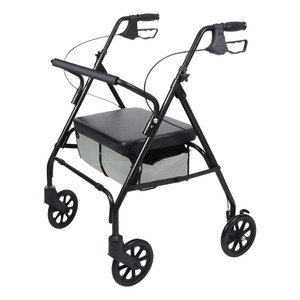
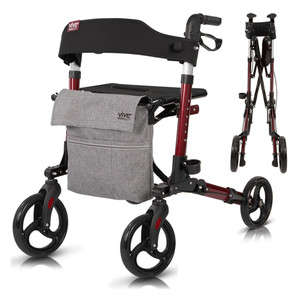
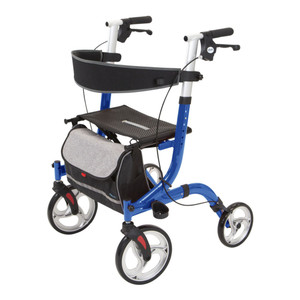
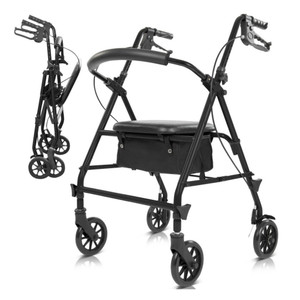
Our walking aids include standard four-wheel rollators with seats, upright rollators with forearm supports, heavy-duty and bariatric models, and a 2-in-1 rollator that converts into a transport chair. We also offer standard and all-terrain knee walkers, along with two-button folding walkers for straightforward everyday support.
These options fall into three main groups: rollators, knee walkers and folding walkers. Each supports mobility in a different way, making it important to match the equipment to the user’s weight-bearing needs, surroundings and routine. Explore our broader selection of parts and accessories or compare the rollators and walkers available on this page to find a practical fit for home, appointments and community use.
What These Walking Aids Are Designed to Do
Walking aids provide two-handed support while allowing the user to remain on their feet. Adjustable handle heights help accommodate different users, while folding frames make the equipment easier to place in a closet, vehicle or other limited storage space. A properly selected aid can make daily routes, from the bedroom to the kitchen or the parking lot to a medical appointment, feel more manageable.
Most rollators in this collection include a built-in seat and hand brakes, giving users a place to pause during longer walks and greater control when stopping. Folding walkers provide a simpler support frame without a seat. Knee walkers serve a different purpose: they are designed to keep weight off one injured foot or ankle while the user remains mobile. Although many customers search for walking aids for seniors, these products may also support adults recovering from an injury or managing temporary or long-term mobility limitations.
Rollator, Knee Walker or Folding Walker?
Begin with the user’s weight-bearing instructions. If a foot or ankle must remain off the ground during recovery, a knee walker may be the appropriate starting point. The injured leg rests on a padded platform while the other leg provides propulsion. Because balance, turning and braking matter, users should confirm with their care team that this type of device is suitable for their recovery plan.
For users who can walk on both legs, the next question is how they want the frame to move. A rollator travels continuously on four wheels and usually includes hand brakes and a seat for rest breaks. A two-button folding walker uses front wheels and rear glides, has no seat and folds relatively flat. Its straightforward design can work well for moving through the home or transporting the frame in a vehicle.
Within the rollator group, consider both posture and capacity. A standard model places the hands on grips near the user’s sides. An upright rollator adds forearm supports and ergonomic handles intended to encourage a taller walking position. Users who need a higher weight rating or more room should compare bariatric and heavy-duty rollators. No single style outranks the others; the right choice is the one that fits the user’s body, walking ability and everyday surroundings.
How to Choose a Walking Aid
Learning how to choose a rollator, knee walker or folding walker starts with more than appearance. Compare the specifications closely, especially if the equipment will be used every day or regularly loaded into a car.
- Weight-bearing instructions from the user’s care team: determine whether both legs may bear weight or one must remain elevated.
- Weight capacity: ratings across this collection range from standard capacities to heavy-duty and bariatric support.
- User height and handle range: check the listed adjustment range, including tall models, rather than assuming one frame fits everyone.
- Wheel size and type: consider smooth indoor floors, sidewalks, pavement, gravel and grass.
- Seat dimensions: on rollators, compare seat width and seat height for comfortable rest stops.
- Folded size and frame weight: both matter when lifting the aid into a trunk or storing it at home.
- Frame material: steel and aluminum frames differ in overall weight and carrying convenience.
- Braking and steering: review how a rollator or knee walker stops, turns and locks in place.
For handle fit, a useful starting point is having the grip align near the crease inside the wrist when the user stands with arms relaxed. Product specifications should always be checked because adjustment ranges, dimensions and capacities vary. If you would like help comparing models, contact Aracent Healthcare for prompt, personalized assistance.
Frequently Asked Questions
The answers below cover common differences among the walking aids in this collection. Always review the individual product page before ordering, as measurements, capacities and included features vary by model.
A healthcare professional can also help determine which device is appropriate for a user’s balance, strength and weight-bearing status. The right equipment should fit the person rather than forcing the person to adapt to an unsuitable frame.
What Is the Difference Between a Rollator and a Folding Walker?
The rollators on this page travel on four wheels. Most include a built-in seat and hand brakes, allowing the user to move forward continuously, control speed and stop for a rest when needed.
Two-button folding walkers move on front wheels with rear glides and do not include a seat. They provide a lighter, straightforward frame that folds flat for transportation or storage.
What Is an Upright Rollator?
An upright rollator includes padded forearm supports and ergonomic handles designed to encourage a taller posture. It may be useful for someone who prefers support through the forearms rather than relying only on standard hand grips.
Fit still matters. For example, the Vive Upright Rollator Walker adjusts for users approximately 5 feet 2 inches to 6 feet 4 inches tall. Check the listed height range and dimensions before selecting a model.
Who Is a Knee Walker For?
A knee walker is designed for someone recovering from a foot, ankle or lower-leg injury who needs to keep weight off one leg. The injured leg rests on a padded knee platform while the user pushes with the other leg and steers using handlebars.
Knee walkers are often used temporarily during recovery. Standard models suit many everyday surfaces, while all-terrain versions offer larger tires for more varied outdoor ground. Suitability should be confirmed with the user’s care team.
How Do I Set the Right Handle Height?
With the user standing upright and their arms relaxed at their sides, the grips should generally line up with the crease on the inside of the wrist. When holding the grips, the elbows should bend comfortably at approximately 15 degrees.
Handle adjustment varies from one walking aid to another. Review the range on the individual product page, especially when shopping for a shorter or taller user, and verify the fit before regular use.
How Much Weight Can These Walking Aids Support?
Capacity depends on the specific model. Several standard rollators in this collection support up to 300 pounds, while selected knee walkers and folding aluminum walkers are rated for as much as 350 pounds.
Heavy-duty options provide greater capacity. The Vive Bariatric Rollator, for example, is rated for up to 500 pounds. Never exceed the capacity listed by the manufacturer, and account for anything carried in an attached storage bag.
What Wheel Size Works Best Outdoors?
The answer depends on the ground. Compact wheels can be convenient on smooth indoor surfaces, while larger wheels may handle sidewalk seams and uneven outdoor paths more comfortably. This collection includes models with 6-inch and 8-inch wheels.
For rougher surfaces, the Vive All Terrain Knee Walker uses 12-inch air-filled tires intended for pavement, gravel and grass. Compare tire type, maneuverability and the surfaces encountered most often rather than choosing by wheel diameter alone.
Do These Walking Aids Fold for Travel?
The rollators, knee walkers and two-button walkers featured in this collection have folding frames for car or closet storage. Folded dimensions differ, and removable components may affect how easily a particular model fits into a trunk.
Frame weight is just as important as folded size for anyone lifting the equipment regularly. Review both measurements on the product page, or contact us for help finding a walking aid that fits the user, the route and the vehicle.