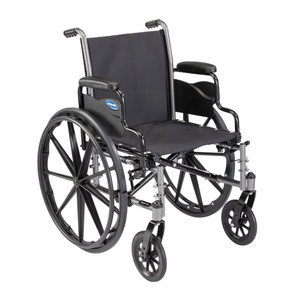
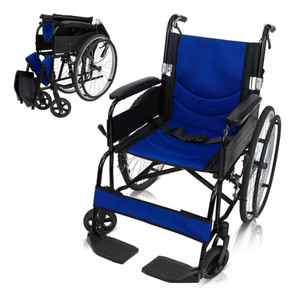
More about Standard/Lightweight Wheelchairs
Our standard and lightweight manual wheelchairs include practical fixed models, folding chairs, hemi-height options, one-arm drive designs, and configurable frames. The selection ranges from straightforward models such as the Tracer EX2 and Essentials EX1 to lighter and more adjustable choices designed for regular mobility at home or in the community.
These chairs are generally intended for users who want familiar manual operation without the added complexity of a highly specialized seating system. If you are comparing this category with other designs, visit our manual wheelchairs page to explore additional frame types and mobility options.
Benefits of standard and lightweight manual wheelchairs
Standard wheelchairs offer a straightforward combination of support, durability, and value. They can be a practical choice for occasional outings, medical appointments, recovery periods, or situations in which a caregiver provides much of the propulsion. Many models fold at the center, making them easier to place in a vehicle or store when they are not being used.
Lightweight manual wheelchairs reduce some of the bulk associated with traditional steel-frame chairs. A lower overall weight can make lifting, loading, and caregiver propulsion more manageable. It can also reduce the effort required for self-propulsion, although wheel position, seat height, user strength, and the surfaces being crossed all affect how a chair feels in motion.
The choices on this page also cover needs that a basic weight comparison does not reveal. A hemi-height chair can position the seat closer to the floor for users who propel with one or both feet. A one-arm drive configuration can allow both rear wheels to be controlled from one side. Configurable models provide more opportunities to select dimensions or components, while fixed packages simplify the ordering process.
Choosing between K2 and K3, fixed and configurable frames
The central decision in this category is how much adjustability and weight reduction you need for the way the chair will actually be used. Product names often include K2 or K3, which are classification terms used to distinguish common wheelchair equipment levels. A K2 chair is typically a standard manual wheelchair, while a K3 chair is generally a lighter model with features suited to more regular use.
A K-code is a useful starting point, but it does not describe every important specification. Two chairs in the same general class may have different transport weights, seat-to-floor heights, wheel configurations, upholstery, arm styles, leg supports, or available seat widths. Always compare the individual product specifications rather than choosing from the K2 or K3 label alone.
Frame weight should also be considered alongside durability and intended use. A lighter chair may be easier to propel or lift into a trunk, while a more substantial frame may suit a buyer who places greater emphasis on a simple, sturdy setup. “Lightweight” does not always mean that every component is lighter, so check whether the listed figure refers to total product weight or transport weight after removable components are taken off.
Finally, decide whether a fixed package provides what you need or whether a configurable chair is more appropriate. Fixed models offer established combinations of seat size, armrests, and leg supports. Configurable models may allow you to select among more dimensions and component styles, which can be valuable when standard specifications do not align with the user’s body, transfer routine, or propulsion method.
How to choose
Begin with the person using the wheelchair, not the number on the product name. Consider where the chair will travel, who will propel it, how frequently it will be folded, and whether the user transfers independently or with assistance.
The following criteria can help narrow the selection:
- Seat width and depth: Choose dimensions that provide support without unnecessary space that may make positioning or propulsion more difficult.
- Overall and transport weight: Review both measurements when available, especially if the chair will frequently be lifted into a vehicle.
- K2 or K3 classification: Use the classification to understand the chair’s general equipment level, then confirm the actual features and specifications.
- Seat-to-floor height: Consider hemi-height options when the user propels with their feet or needs a lower seat for transfers.
- Fixed or configurable design: Select a fixed package for a straightforward setup or a configurable model when dimensions and components need closer tailoring.
- Folding and storage needs: Check the folded width and whether the leg supports, armrests, or rear wheels can be removed.
- Propulsion method: Determine whether the chair will primarily be self-propelled, pushed by a caregiver, foot-propelled, or operated using a one-arm drive system.
- Armrests and leg supports: Consider desk-length versus full-length arms, removable or flip-back designs, and fixed, swing-away, elevating, or adjustable leg supports when offered.
- Weight capacity: Confirm that the selected model provides an appropriate capacity while accounting for personal items that may be carried on the chair.
- Indoor and outdoor access: Measure doorways, hallways, ramps, and vehicle cargo areas rather than assuming a chair will fit based on seat width alone.
A wheelchair can look compact in a photograph while still being too wide for a narrow doorway once the wheels and handrims are included. Compare the overall width with the smallest spaces the chair must pass through, and leave reasonable clearance for safe maneuvering.
If several models appear similar, focus on the details that affect daily handling. The difference between lifting a chair once a month and loading it twice a day is significant. Aracent Healthcare’s product specialists can help you review dimensions, folding features, and available configurations before you order.
Frequently asked questions
Standard and lightweight wheelchairs share a familiar folding manual-chair design, but differences in weight, seat height, configuration, and components can change how well a model suits a particular routine. The answers below address the questions buyers commonly face when comparing this category.
Because features vary by product and configuration, confirm the specifications shown on the individual product page. Our team is also available to help clarify measurements and options.
What is the difference between a standard and a lightweight manual wheelchair?
A standard manual wheelchair generally prioritizes simple operation, durability, and value. It may suit occasional mobility, short-term recovery, facility use, or users who are usually pushed by a caregiver.
A lightweight manual wheelchair is designed with reduced frame or component weight, which can help with propulsion and transportation. The exact difference varies by model, so compare total weight, transport weight, adjustability, and frame construction rather than relying only on the category name.
What do K2 and K3 mean on a wheelchair?
K2 typically identifies a standard wheelchair equipment class, while K3 identifies a lightweight or high-strength lightweight class. These labels help describe the chair’s general construction and intended equipment level.
They do not replace a review of the specifications. A buyer should still compare seat dimensions, seat-to-floor height, product weight, folding design, armrests, leg supports, and configuration choices before deciding.
When should I consider a hemi-height wheelchair?
A hemi-height wheelchair has a lower seat-to-floor position than many standard setups. This design can help a user reach the floor with one or both feet for propulsion and may also suit certain transfer routines.
The correct seat height depends on the user’s lower-leg length, cushion thickness, footwear, and preferred propulsion method. Some chairs offer adjustable axle positions or other setup choices, while others are built around a specific height range.
Is a folding wheelchair easy to transport in a car?
Many chairs in this category have cross-brace frames that fold inward, reducing their storage width. Swing-away or removable leg supports and removable armrests can further simplify loading when those features are included.
Folding does not automatically make a wheelchair easy for every person to lift. Check the chair’s transport weight, folded dimensions, removable components, and the size of the vehicle’s cargo opening. The person handling the chair should also be comfortable with its weight and lifting method.
Should I choose a fixed or configurable wheelchair?
A fixed wheelchair package can work well when its standard seat size, arm style, leg supports, and seat height match the user’s needs. It also makes comparison and ordering more direct because the primary components have already been selected.
A configurable wheelchair is worth considering when the user needs a particular seat dimension, propulsion setup, armrest type, foot support, or seat-to-floor height. Configuration adds choices, so measurements and daily-use requirements should be reviewed carefully before the order is placed.
Can Aracent Healthcare help me compare lightweight manual wheelchairs?
Yes. Our experienced specialists can help you interpret product weights, dimensions, K-code terminology, folding features, and available configurations. We can also help you identify questions to consider based on transportation, indoor access, caregiver assistance, and the user’s propulsion method.
Browse the available products above, then contact Aracent Healthcare if you would like personal assistance comparing your options. We offer prompt customer support, quality mobility equipment, and free shipping on orders within the contiguous United States.