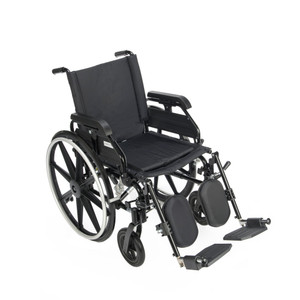
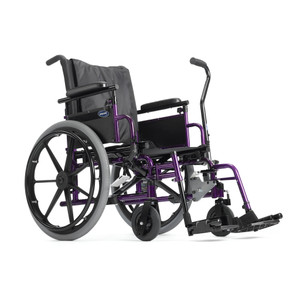
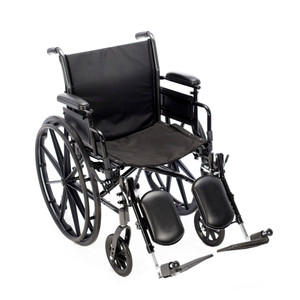
More about High-Strength Lightweight Wheelchairs
A high-strength lightweight wheelchair is a folding manual chair with a frame built to stay light while it stands up to everyday use, the kind of chair a person pushes on their own through most of the day. It also gives you more ways to set the chair up around the user than a standard lightweight chair does, so the seat height, back and armrests can be fitted to how they sit and move.
High-strength lightweight manual wheelchairs sit in the middle of our manual wheelchair range, between the everyday folding chairs and the heavy-duty frames. For a chair that will be used now and then, or pushed mostly by a caregiver, our standard and lightweight wheelchairs may cover what you need with a simpler setup.
Benefits of a high-strength lightweight frame
Depending on the model, the frame is high-strength steel or aluminum, designed to keep weight down for users who push, fold and lift their chair many times a day. A lighter chair can take less effort to propel, which can ease the work on the shoulders and arms over a full day at home and out in the community.
What sets this type apart is how closely the chair can be fitted to the person using it. Key settings such as the backrest, armrests and seat height generally offer greater adjustment ranges, and more seat size choices allow a more tailored fit, which can help the user propel the chair with less wasted energy. That makes this type well suited to active users and anyone who relies on their chair for high daily use.
Many models also offer more accessories and configurable options, so the chair can be set up around the user's routine. Some have quick-release rear wheels, which make a lightweight folding wheelchair easier to transport and store, and each product page lists which features that chair includes.
Choosing a K4 chair: frame class, adjustment and weight capacity
The first question is whether the user needs a K4 frame at all. K4 is the label for the high-strength lightweight class, and a K4 wheelchair suits someone who pushes themselves for much of the day and needs the chair set up around them. A K3 lightweight chair can meet more occasional use, or a routine where a caregiver does most of the pushing, and our page on K2 and K3 lightweight wheelchairs explains those classes in more detail.
The second question is how much adjustment the user needs: how many axle positions the chair offers, which seat-to-floor heights they give, and how far the back height adjusts. Moving the rear axle forward, as far as the user stays stable, has been linked with lower push forces and fewer strokes at the same speed, and chairs usually arrive with the axle set all the way back, so the setup after delivery makes a real difference. A configurable version fits more closely when a stock chair can't be set up around the user, and our customizable wheelchairs let you choose the frame size, arm style and other parts.
The third question is weight capacity. Each model carries its own rating, and on some models it changes with the seat width, so check the figure for the exact size you order. Users who need a higher rating can compare our heavy-duty wheelchairs.
How to choose
Once you know a high-strength lightweight frame fits, these points help you compare one chair with another.
- Seat width and depth: The sizes offered for the model, measured with our wheelchair sizing guide.
- Axle positions: How many there are and the seat-to-floor height each one gives.
- Back height and armrest length: What suits the user's transfers and lets them pull up close to a table.
- Chair weight and folding: The weight without footrests, the folded width and whether the rear wheels come off for the car.
- Overall width: Measured against the narrowest doorway at home.
- Weight capacity: The rating for that model and seat width.
- Footrests: Whether footrests or elevating legrests come with the chair or are picked separately from our footrests and legrests.
- Anti-tippers: Whether they come with the chair.
- One-arm use: A user who pushes with one arm can compare our one-arm drive wheelchairs.
Each product page lists the exact specifications for that chair, so take your time comparing them. When you'd like a second opinion, our specialists are happy to help you compare chairs.
Frequently asked questions
What is a high-strength lightweight wheelchair?
A high-strength lightweight wheelchair is built with durable materials that reduce overall chair weight while maintaining strength for daily use. These wheelchairs are easier to propel, lift, and transport than many standard models. They are often chosen by users who want a balance of durability, maneuverability, and portability.
Who should use high-strength lightweight wheelchairs?
These wheelchairs are ideal for users who self-propel, travel frequently, or need a chair that is easier for caregivers to lift and store. They may also benefit active users who want less effort during daily mobility. The right model depends on user strength, seating needs, and typical environment.
Are these wheelchairs adjustable?
Many high-strength lightweight wheelchairs include adjustable features such as seat height, armrests, footrests, axle position, or backrest options. Adjustability can improve comfort, propulsion efficiency, and fit. Available adjustments vary by model.
Can high-strength lightweight wheelchairs be transported easily?
Yes, many models fold and include removable components such as footrests or wheels. Their reduced weight makes them easier to load into vehicles or store at home. This makes them a strong option for users and caregivers who need frequent transport.
Do they reduce effort during propulsion?
Yes, a lighter frame can reduce the effort required to self-propel, especially over longer distances or repeated daily use. Proper fit and wheel positioning also affect propulsion efficiency. Users who self-propel regularly may benefit significantly from a lightweight design.