More about Patient Lifts
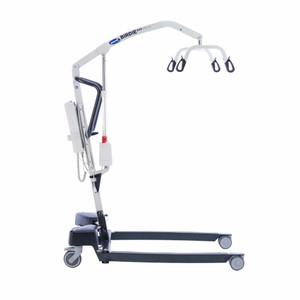
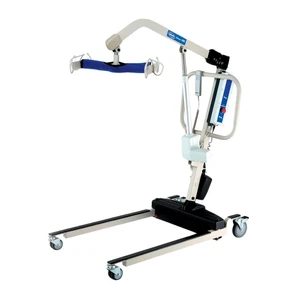
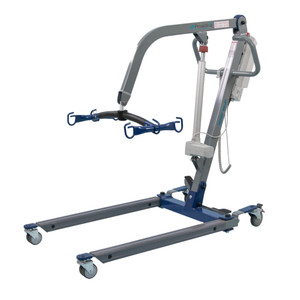
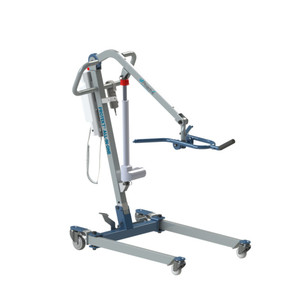
Choosing a patient lift starts with the transfers it needs to handle: getting out of bed into a wheelchair, from a chair onto a commode, or between any two surfaces a person cannot manage alone. The equipment in this category falls into a few broad groups. Full-body lifts raise and lower a person in a sling, stand-assist equipment helps someone who can take some of their own weight rise to standing, and slings and lift accessories complete the setup.
Each group has its own section of the store, and each of those pages goes into the detail of choosing within it. This page is the place to work out which group fits the person and the care setting before comparing individual models.
Benefits of patient lifts
The main benefit of a lift is that the equipment takes on the lifting motion during a transfer. This can help reduce the strain on a caregiver when a person needs to move several times a day, and it gives the person being moved a supported, controlled transfer instead of a manual lift.
A lift also makes routine transfers more consistent. Once a suitable lift and sling are in place, the same steps are followed each time, which can help family caregivers at home and staff in clinical settings work the same way from one transfer to the next. Lifts in this category are used in hospitals, care facilities and private homes.
The category spans several lift types and weight capacities, including heavy-duty models, so options can be compared against both the person's needs and the room where transfers take place.
The key decision: how much the person can help with the transfer
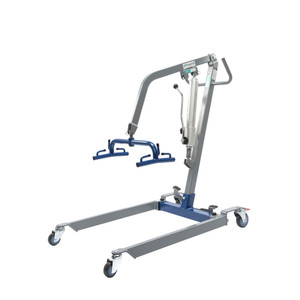
The first question is how much the person being moved can take part in the transfer. When someone cannot bear weight or needs support beneath the whole body, a full-body lift with a sling is generally the type to look at. These are offered as electric lifts, which raise and lower with a battery-powered motor and a hand control, and hydraulic lifts, which the caregiver raises with a pump handle.
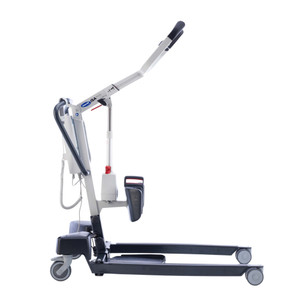
When the person can bear some weight and help with the movement, stand-assist equipment may suit them. Sit-to-stand lifts raise the person from sitting into a supported standing position, while standing transfer aids give them a steady frame to pull up on as a caregiver guides the move. Transfer needs can change over time, so a qualified healthcare professional can help assess which type matches the person's current abilities.
Where the lift will be kept is the next consideration. Portable patient lifts are designed with storage and travel in mind, and that selection includes both powered and hydraulic models.
How to choose
Start with the person and the transfers they need each day, then narrow the options by room and equipment. Each lift type has its own page with more detailed guidance once the general type is clear.
- Level of support: Decide whether the person needs full-body support or can bear some weight and take part in a standing transfer.
- Operation: Compare battery-powered lifting with hydraulic pumping against how often transfers happen and who will operate the lift.
- Weight capacity: Choose a lift rated for the person's weight, and check that the sling and any accessories carry a suitable rating as well.
- Room and furniture: Measure doorways, the space beside the bed and the clearance under the bed and around chairs before comparing base dimensions.
- Sling: Most lifts work with a compatible sling. The slings section includes full-body, divided-leg, stand-assist and toileting styles; check the attachment style and size against the lift.
- Storage and travel: If the lift will be put away between uses or taken from place to place, compare portable models and their stored size.
- Accessories: Lift accessories, such as scales made for use with a patient lift, add functions to a lift setup; check that each accessory is compatible with the specific lift model.
For help comparing lift types, sizes or sling compatibility before ordering, contact us.
Frequently asked questions
What is a patient lift?
A patient lift is a mobility device designed to help transfer people with limited mobility.
Who typically uses patient lifts?
They are commonly used in hospitals, nursing homes, and home care environments.
Do patient lifts require slings?
Most lifts use a compatible sling to support the person during the transfer.
Are patient lifts safe for caregivers?
Lifts take on the lifting during a transfer, which can help reduce strain on caregivers.
What types of patient lifts are available?
Common types include hydraulic lifts, electric lifts, and sit-to-stand lifts.