More about Reclining Wheelchairs
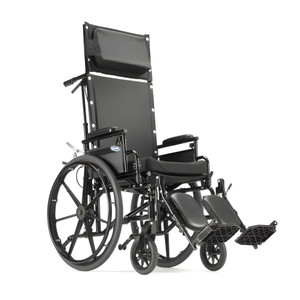
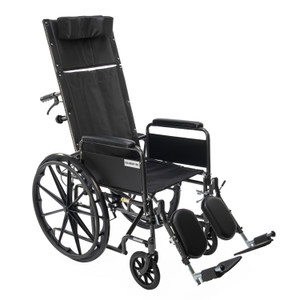
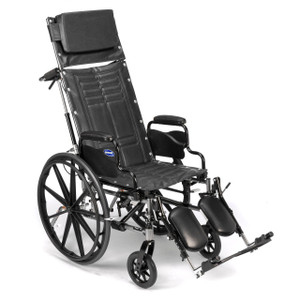
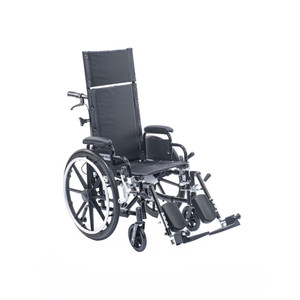
Reclining manual wheelchairs are manual chairs with a backrest that lowers while the seat stays level, so the user can rest, change position or receive care without having to get out of the chair. They're usually built with a taller back and head support to hold the upper body as it leans back, which is why they suit people who spend much of their day sitting.
Reclining chairs differ from one another in a few main ways: how far the back goes down and how it's adjusted, how the head and legs are supported, and the seat sizes they come in, including chairs sized for children. You can also compare them with every other style on our manual wheelchairs page, from transport chairs to heavy-duty frames.
Benefits of a reclining wheelchair
A reclining wheelchair lets the user change position through the day without a transfer to a bed or a couch. In a normal day that can mean easing the back down a little for a meal or a visit, then a good deal further for a rest in the afternoon. Lowering the back can also help shift some of the user's weight off the seat during long hours of sitting, a change of position that a standard wheelchair isn't designed to offer.
A high back reclining wheelchair is designed to support the back and head the whole way down, so the user stays supported whether they're sitting up or lying well back.
A more open hip angle can also make dressing and personal care easier while the user stays seated, both for them and for the caregiver helping out.
The key decision: how much recline the user needs
The decision that shapes the rest of your search is how far back the user needs to go, and how often. Some reclining chairs lower from upright all the way to a flat position, while others stop a little short of flat, and each product page lists the range for that chair. A user who naps in the chair or receives care lying well back will make use of a full range, while someone who mostly wants a break from sitting upright may be well served by a chair that stops short of flat.
From there, think about what the user needs around the recline: head support that suits how they rest, front riggings for the legs, a seat that fits, and whether a stock chair works or a chair built to order is the better match. On chairs fitted with elevating legrests, the legrests adjust separately from the backrest, so the back and the legs can each be set to the position the user finds comfortable.
Reclining chairs and tilt-in-space chairs both give the user a way to shift position and take some pressure off the seat. A reclining chair does it by lowering the backrest and opening the hips, while a tilt-in-space chair tips the seat and back together. If you're weighing both styles, you can also browse our tilt-in-space wheelchairs.
How to choose
Once you know recline is the right fit, these points help you compare one full reclining wheelchair with another, so take your time with each one.
- Recline range: how far the back lowers, and how it's released and locked in place, varies from model to model.
- Headrest: check how high the headrest sits and how it adjusts, so the head stays supported at every angle the user will rest at.
- Front riggings: some models include elevating legrests and others are sold without, and you can add wheelchair footrests and legrests separately.
- Seat size: measure seat width, seat depth and back height using our wheelchair sizing guide.
- Sizes for children: smaller seat widths and depths are made for kids, and you'll find them with our pediatric wheelchairs.
- Length and turning room: a chair is longer when it's fully reclined, so measure the space beside the bed and through doorways at home.
- Stability: look at the rear anti-tippers and how the chair stays steady as the back goes down.
- Travel: if the chair will ride in a car, compare its folded width and its weight on the product page.
- Stock or built to order: when a standard chair won't fit, customizable wheelchairs let you choose the seat size, armrests and wheels.
Exact specifications are listed on each product page, so look there for the numbers on any chair you're considering. If you'd like a hand comparing chairs, contact Aracent Healthcare and our team will help you narrow the options.
Frequently asked questions
What is the difference between a reclining wheelchair and a tilt-in-space wheelchair?
A reclining wheelchair lowers the backrest while the seat stays level, which opens up the angle at the hips. A tilt-in-space wheelchair tips the seat and back together, so the angle between them stays the same and the user keeps the same seated posture.
How far does a reclining wheelchair recline?
The range differs from model to model, running from upright down to near-flat or fully reclined on the chairs that go furthest. Each product page lists the range for that chair, so it's worth checking there before you order.
Can a reclining wheelchair be self-propelled?
Yes, a reclining chair with large rear wheels and hand rims can be moved by the user, and a caregiver can push it from behind using the handles. The wheel setup listed on each product page shows how that chair is meant to be moved.
Do reclining wheelchairs come with legrests and a headrest?
Front riggings vary by model. Some chairs come as a reclining wheelchair with elevating leg rests, and others are sold without so you can pick your own from our wheelchair footrests and legrests. Head support is part of the design, with adjustment varying by model.
Are reclining wheelchairs available for children?
Yes. Reclining chairs for children are built with smaller seat widths and depths to fit a growing child, and you'll find them alongside our other pediatric wheelchairs. Measuring your child first helps you choose the right seat size.
Can a reclining wheelchair be configured to the user?
Some reclining models can be built to order, with choices of seat size, armrests, wheels and front riggings. Our customizable wheelchairs bring those built-to-order chairs together, and our team can help you work through the options.